Sponsor a Centre


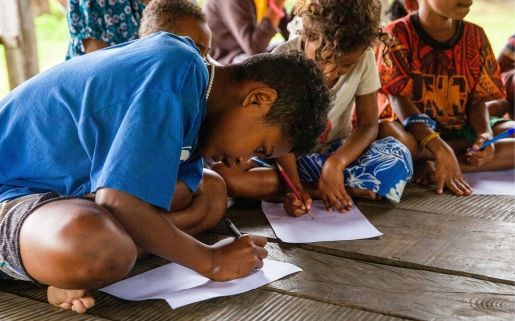
You can choose to become a ‘Discretionary Sponsor’ and support an entire institution, rather that an individual child.

By sponsoring an institution, all children attending are guaranteed to receive education, materials and one nutritious meal a day, even if they are not sponsored individually because of their age.

How does discretionary sponsorship work?

Your tax deductible sponsorship of $25 per month (paid annually, biannually, quarterly or monthly) will benefit every child in an institution (usually a children's home, school or day care centre). Discretionary sponsors receive a yearly newsletter from the institution giving information on events and the activities of the children.

Where can you sponsor a centre?

The tables below show our list of institutions per country. There is further information on some of the institutions, click on the names as you find the links.


Asia


Bangladesh

  • Integrated Children's Centre
    Both the sighted and non-sighted children are residing in the same campus and they are receiving education in the same class under a specialized integrated education system.

India

  • Hlimna in Girls Home (India East)
    It is a home for 50 orphan  girls who come from single parents or
    divorced parent families, where the parents can not look after them any more.
 

Myanmar

  • Yangon Boys Home
    Provides care, shelter and protection; currently accommodating 50 boys aged between 5 and 20.
  • Yangon Girls Home
    It accommodates 50-55 girls aged between 2 and 20 years of providing basic education up to the 10th year
  • Htoe Wah Chaung Tuition Program
    This program attends the needs of 20 children 5 to 15 years old, from poor families who have difficulty paying for school.


Africa


Ghana

  • Ghana Feeding Program
    Cares for children with malnourishment problems and trains their mothers for the care of their children.

Kenya East

  • Karibu Centre
    Under refurbishment, will care for abandoned babies and children of the streets
  • Likoni School for the Blind
    Its aim is to care for the visually challenged in society and to train them under an understanding that “disability is not inability”.
  • Mombasa Children's Home
    The Children's Home provides care
    and nurture for up to 60 children, ranging ages from 3 years to around 15 years.
  • Thika School for the Blind
    Open for any visually impaired children. It is the only High School of its kind to date in the country.
  • Variety Village Workshop
    Offers residential practical skills training for young men and women aged 15-25 years. Sponsors children from salvation Army Homes, but it's open at low cost for everyone else.

Kenya West

  • Kaptanai Primary School
    It is a mixed school, providing the pupils with opportunities to
    enjoy learning, acquire literacy, develop critical thinking, local judgment, self disciplined and aesthetic values.
  • Wanjoya Primary School
    It is a small rural school, housed in one mud block which is falling down, and one brick block which is incomplete. There are
    insufficient classrooms with some children learning under the African sun. It takes children from nursery age.

South Africa

  • Bethany Childrens Home
    The Bethany Children’s home caters for children aged 6 to 18, who are often admitted to the home as they have been sexually abused. It has a waiting list of 20-30 children
  • Jabavu Creche
    The Crèche accommodates 140 preschool children from the age of 0. They are given three healthy meals a day and help with their education.
  • Ethembeni Childrens Home
    It is a place of safety and it caters for 60 children from birth to three years of age who are HIV Positive or have been abandoned by their parents.
  • Firlands Childrens Home
    Provides residential care for boys and girls with a holistic approach that includes emotional, physical, educational, social and spiritual development.

Tanzania

  • Matumaini School for Disabled
    Matumaini is the only school of its kind in Tanzania, caring for children with disabilities. The school provides necessary medical treatment through the local hospitals and the resident physiotherapist.
 

Mozambique

  • Ndlavela Creche
    It is a single room building where 30 -45 children between 3-5 yrs of age meet Monday to Friday from 7 am till 5 PM.  These children have one plastic chair each to sit on and that is it. No toys, no pencils, no books, no posters on the walls, no children's art on the walls, no black board, no chalk, no paper. They sing happily their 123's in Portuguese and clap to a song about the colours.
 

Rwanda

  • Catherine Booth Pre-School
    The Pre-school currently has 15 children, one teacher, one teacher’s aid and one cook.  It has the ability to educate 60 children in total but is unable to as parents are unable to afford the costs.  Through sponsorship it will be possible for all 60 children to attend with parents contributing a small amount.


Caribbean and South America


Argentina

  • Children home El Redil
    Aims to ensure that each child has the clothes he or she needs for
    daily wear, plus an extra change of clothes for outing. The children are provided four daily meals, seven days a week.
  • Children's home No me Olvides
    For disadvantaged children maily from solo mums. It offers meals and pre-school education to children between the ages of 2 to 4 years, and assists them with school work.

Brazil

  • Pelotas Integration Centre
    (Rio Grande do Sul)
    Cares for 70 boys and girls 4 to 14 years old with social and edducation support. It is a centre that struggles greatly financially.
  • Guarulhos Creche and Community Centre (Sao Paulo)
    Cares for 60 boys and girls 3 to 5 years old. Offers a kindergarten and preschool programme to children from solo mums and poor families, they receive 3 meals a day, outings and parties on special dates.
  • Meier Social and Educational Centre (Rio de Janeiro)
    Cares for 40 boys and girls 7 to 15 with social and education support. It runs an after school program in order to keep the children occupied and off the streets while their solo mums are working.
  • Suzano Creche and Open Centre (Sao Paulo)
    Cares for 252 children aged 2 to 5 with a day care programme. The complex includes a kindergarten and preschool, a Home and a professional training centre for teenagers. They receive dental treatment, religious education and social support.

Jamaica

  • School for the blind and visually impaired
    Provision is made for 110 children on a secure Campus, which includes a  children’s home, a residence for blind adults, a Salvation Army Corps and a basic school. Skills taught include life skills, mobility, orientation, typing,  computer skills and Braille.


Haiti

  • Bethany Children's Home
    Only orphans and vulnerable children are accepted at the  home. Currently it has a total of 46 children, 27 girls and 19 boys.
  • Plaisance School
    The Basic School, which caters for at least 150 children up to the end of primary grade gives children one meal a day to help reduce malnourishment, which is a critical problem in Haiti.

Paraguay

  • Paraguay Children's Home
    Aims to ensure that each child has the clothes he or she needs for daily wear, plus an extra change of clothes for outing. The children eat four daily meals, seven days a week.


South Pacific


Papua New Guinea

  • Education Support for Cadets' Children
    Papua New Guinea’s project of of looking after the Children of Cadets in Training has come into being, because of the lack of funds Cadets have to maintain their children’s living standard and education.

Fiji

  • Fiji Family Centre
    The kindergarten is located in Nasinu, Suva.  This part of the city is very poor, therefore the Salvation Army is charging very low fees, so that more children have the chance of gaining an education. 

The Child Sponsorship Department
The Salvation Army
PO Box A435
SYDNEY SOUTH  NSW  1235
Ph: 02 9266 9880, 02 9266 9525 or 02 9266 9521
Fax: 02 9266 9652
E-mail: child.sponsorship@aue.salvationarmy.org


Bookmark and Share